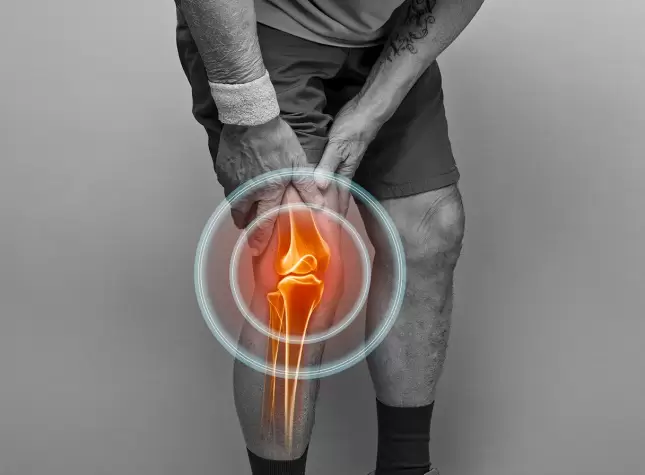
The knee is the second largest and most intricate joint of the human body. It supports the total weight of the upper body and accomplishes movements such as walking, running, climbing stairs, and squatting. Due to its continuous usage and load, the knee is susceptible to injury, wear-and-tear, and illnesses.
Read Also: Bones Matter: Are You Giving Yours the Attention They Deserve
Following are 7 of the most frequent causes of knee pain, described with symptoms and their treatment options.
1. Osteoarthritis: Wear and Tear of the Knee Joint
Osteoarthritis is the most frequent cause of chronic knee joint pain. It often occurs in older adults, but younger individuals can acquire it if they have a history of joint trauma or obesity.
In osteoarthritis, the cartilage covering your knee bones gets worn out. This allows the bones to rub against one another, resulting in pain, stiffness, swelling, and decreased movement. Getting up from sitting for a long time or climbing stairs can seem challenging.
Osteoarthritis is treated by:
- Lifestyle modification such as weight loss
- Low-impact exercises such as swimming or cycling
- Physiotherapy to enhance strength and balance
- Pain relief medicines
- Injections to minimize joint inflammation
- Knee replacement surgery for severe cases, offered at the best knee replacement hospital in Kolkata
2. Ligament Injuries: Sudden Twists or Sports Injuries
The knee contains a number of ligaments that bind the bones and stabilize the joint. They are the ACL, PCL, MCL, and LCL. They are frequently injured in sportsmen or individuals who engage in high-impact sports.
An ACL tear, on the other hand, may occur when there is a sudden twist, jump, or fall. There will be a pop sound and immediate pain, along with swelling and an inability to move the knee.
Ligament injury treatment varies with severity and can involve:
- Rest, ice, compression, and elevation (RICE protocol)
- Bracing of the knee
- Recovery physiotherapy
- Surgical reconstruction or repair if the ligament is a clean tear
3. Meniscus Tear: Cartilage Injury Caused by Sudden Movements
Meniscus is a rubbery, cartilage disc in your knee that serves as a shock absorber. Sudden twisting, turning, or lifting can cause a meniscus tear. Meniscus tears also occur in older people because of degeneration of cartilage due to aging.
The signs and symptoms include knee swelling, pain, and catching or locking sensation during walking or bending the knee.
Treatment includes:
- Rest and cold treatment
- Anti-inflammatory medications
- Strengthening exercises for the knee
- Arthroscopic surgery for severe or non healed tears
4. Patellar Tendinitis: Inflammation in the Front of the Knee
Patellar tendinitis, or jumper's knee, involves the tendon that joins your kneecap to the shinbone. It is most prevalent in jumpers and runners, but anyone may develop it due to overuse or poor technique during exercise.
Symptoms are pain at the front of the knee, particularly when walking downhill, kneeling, or jumping.
Treatment is:
- Rest and abstaining from physical strain
- Ice treatment and elevation
- Stretching and strengthening exercises
- Anti-inflammatory drugs
- Physiotherapy to improve posture and movement
Read Also: Best Neurosurgeon in Kolkata: Who to Consult for Advanced Brain and Spine Surgery
5. Knee Bursitis: Inflammation due to Repetitive Pressure or Trauma
Bursae are fluid-filled sacs that cushion between tissues in your knee. When the sacs become inflamed, bursitis results. It can result from repetitive kneeling, infection, or trauma.
The knee can become red, warm, swollen, and painful to the touch. It becomes painful to move the knee.
Treatment typically involves:
- Rest and not putting pressure on the knee
- Ice packs and compression
- Painkillers or anti-inflammatory medications
- Draining of fluid if swelling is prominent
- Antibiotics if infection
Read Also: What Is Hernia Surgery? Procedure, Recovery & When It’s Needed
6. Rheumatoid Arthritis: An Autoimmune Cause of Knee Pain
Rheumatoid arthritis (RA) is an autoimmune condition in which the immune system targets healthy tissues in the joints. It occurs in individuals of all ages and most commonly involves both knees.
Symptoms are pain, swelling, heat, and stiffness, particularly in the morning. RA can also cause deformity and destruction of the joint if left untreated.
Treatment involves:
- Anti-rheumatic medication such as DMARDs and biologics
- Corticosteroids to manage inflammation
- Physical therapy and joint protection measures
- Surgery for replacement of the joint in severe cases
Read Also: How Long Does It Take To Recover From Brain Surgery? Recovery Timeline & Tips
7. Fractures and Dislocations: Traumatic Injuries
Fractures of the bones near the knee or dislocation of the kneecap are severe injuries typically resulting from falls, road traffic accidents, or sports injuries. Such injuries result in acute and severe pain, swelling, and inability to move the leg.
If it's a dislocation, the knee can look abnormal. An X-ray or MRI is required to assess for bone or ligament injury.
These are the treatment choices:
- Immobilization in a brace or cast
- Surgery to straighten or stabilize the fractured bone
- Rehabilitation to gain function
- Control of pain and inflammation
Read Also: Right Side Chest Pain: Common Causes and When to See a Doctor

 IRIS
IRIS

 Address: 82/1, Raja S. C. Mullick Road, Kolkata 700047
 Open: 24x7
 +91 8929579509