There are two types of hernia surgery:
1. Open Hernia Surgery
Under this technique, the doctor cuts close to the hernia area, pushes the protruding tissue back, and closes the muscle wall with stitches. A mesh can be inserted to provide support to the weak spot. It is generally done under local or general anaesthesia.
Open surgery is effective and safe but can have a slightly longer recovery period and some more pain than laparoscopic techniques.
2. Laparoscopic (Keyhole) Hernia Surgery
This is a minimally invasive procedure. 2–3 small incisions are made by the surgeon and a camera and tools are placed inside to fix the hernia with a mesh. General anesthesia is needed and it is for those who have smaller hernias or wish for quicker recovery.
Laparoscopic surgery tends to be less painful, less scarred, and allow quicker return to work.
Your doctor will determine which approach is best for you depending on the size of the hernia, its location, your overall health, and other considerations.
Read Also: How To Check Your Heart Health: Tests, Signs & Prevention Tips
Common Types of Hernias Corrected with Surgery
There are several types of hernias, and each can have a somewhat different solution:
- Inguinal Hernia: The groin area (most prevalent in males).
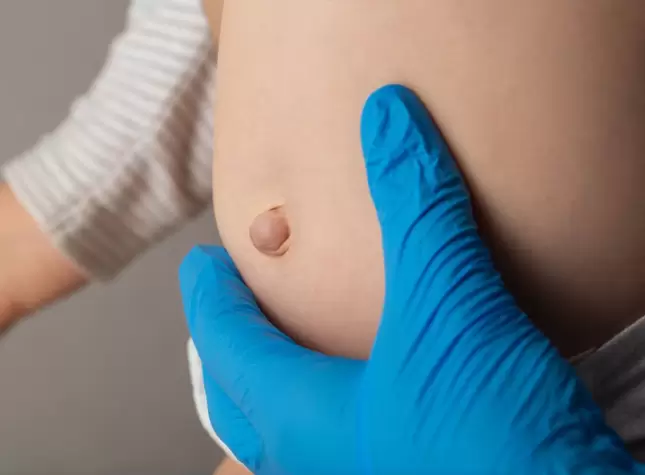
- Umbilical Hernia: Around the navel.
- Incisional Hernia: Where an old surgical incision has been made.
- Femoral Hernia: In the upper region of the thigh (more frequently in women).
- Hiatal Hernia: In the upper part of the stomach, close to the diaphragm.
All these can be cured with surgery for hernia.
Read Also: 10 Common Symptoms Of Kidney Disease You Shouldn’t Ignore
What to Expect Prior to Surgery?
Prior to surgery, your surgeon will:
- Perform a physical examination.
- Recommend tests such as blood test, ECG, or imaging.
- Tell you to stop drinking and eating 6–8 hours prior to the surgery.
- Review your medical history and medications.
If you have other medical conditions such as diabetes or high blood pressure, these must be well managed prior to surgery.
Read Also: How Long Does It Take To Recover From Brain Surgery? Recovery Timeline & Tips
What Happens During the Operation?
The operation typically takes 30 to 90 minutes, depending on the size and type of hernia.
During the operation:
- You will be put under anesthesia to avoid pain.
- The hernia is pushed back into the abdominal cavity.
- The weak area in the muscle is fixed using sutures or mesh.
- During laparoscopic surgery, a camera provides a view inside the body on a screen.
- After repair, the region is stitched up and wrapped in a dressing.
Healing After Hernia Surgery
Healing time varies with type of surgery:
- Open Surgery: Most people can go back to work in 2–4 weeks.
- Laparoscopic Surgery: Healing is quicker; most can get back to work in 1–2 weeks.
Some things to expect are:
- Mild pain and swelling for a few days
- Pain medications to make you feel more comfortable
- Follow-up visit in 7–10 days
- You will be instructed not to lift heavy objects for 4–6 weeks
- You can begin walking gently the day of your surgery or the following day, depending on your doctor's recommendation. Most patients have a smooth recovery without difficulty.
Can a Hernia Recur After Surgery?
Yes, in very occasional instances, a hernia may recur. Recurrence is unlikely if:
- The operation is performed by a seasoned surgeon.
- The use of a mesh is appropriate.
- You strictly adhere to post-surgery guidelines.
- You do not lift heavy weights and keep yourself slim.
- Correct treatment and follow-up may provide a lifelong cure.

 IRIS
IRIS
 Address: 82/1, Raja S. C. Mullick Road, Kolkata 700047
 Open: 24x7
 +91 8929579509